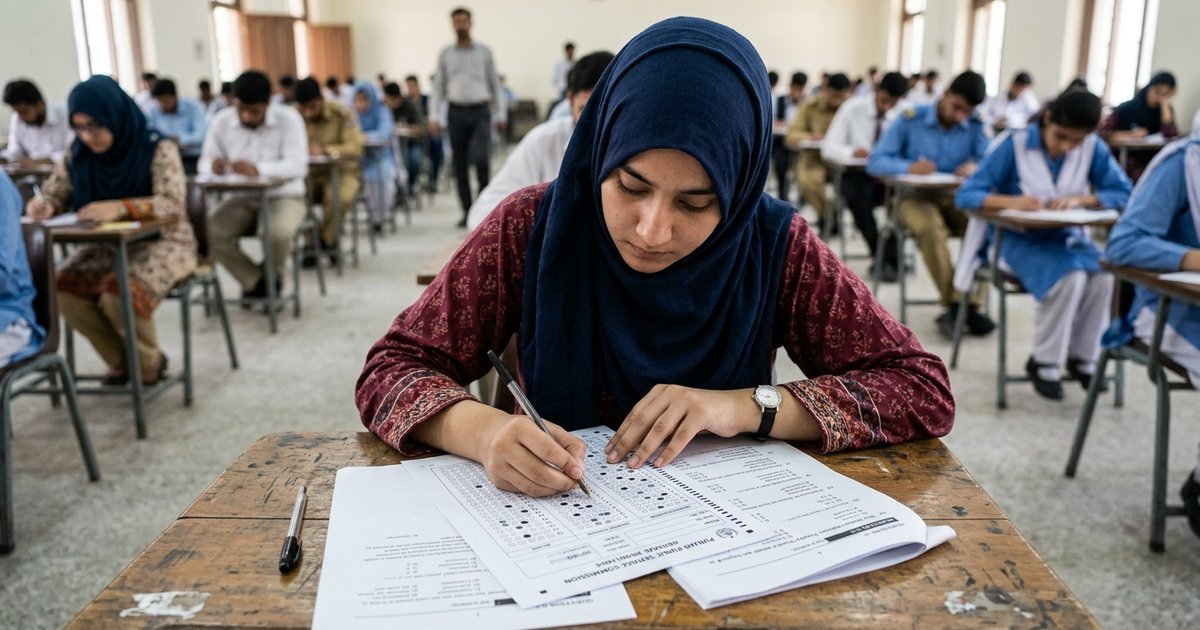
Government Testing Agencies in Pakistan: Passing Marks, Negative Marking, and Preparation Guide
Securing a government job in Pakistan through competitive examination requires more than academic knowledge. Every year, over 1.2 million candidates apply for gazetted and non-gazetted vacancies announced across federal and provincial ministries. However, recruitment testing in Pakistan is decentralized across distinct constitutional commissions and specialized autonomous testing bodies.
Understanding how each testing body evaluates applicants is critical. For instance, while the Federal Public Service Commission (FPSC) imposes no penalty for wrong answers in its general recruitment screening tests, the Punjab Public Service Commission (PPSC) deducts 0.25 marks for every incorrect response. Similarly, SIBA Testing Services (STS) enforces a strict 40 percent qualifying threshold required for provincial departmental recruitments in Sindh.
This handbook compares every major testing agency in Pakistan, examines official negative marking policies, contrasts qualifying thresholds, details merit calculation formulas, and provides direct access to online mock test practice.
- Negative Marking Varies Significantly: PPSC and SPSC deduct 0.25 marks per incorrect MCQ. In contrast, FPSC general screening tests and STS screening examinations do not enforce negative marking.
- Minimum Qualifying Thresholds: FPSC requires 50 percent minimum marks in general screening tests. PPSC requires 40 percent marks on the 100-mark single paper. STS requires 40 marks out of 100 for screening certificate eligibility.
- Merit Formulation Weightage: In PPSC and SPSC recruitments, academic records, written test scores, and interview performance are aggregated. Scoring above 65 in written tests often overcomes average academic divisions.
- Blind Guessing Penalty: In testing agencies with 0.25 negative marking, random guessing carries an expected mathematical value of zero. However, eliminating two incorrect options turns the probability net-positive (+0.375 expected marks).
- Standard OMR Verification: Answer keys for NTS, STS, and PPSC are published within 24 to 72 hours of examination completion, permitting candidates to cross-verify carbon copies.
- Simulate Before Testing: Taking timed practice tests allows candidates to test their negative marking tolerance before sitting in an official hall. Practice papers are available on the JobJunction Mock Tests Portal.
- 1. Public Sector Testing Framework in Pakistan
- 2. Master Testing Agency Comparison Matrix
- 3. Federal Public Service Commission (FPSC)
- 4. Punjab Public Service Commission (PPSC)
- 5. Sindh Public Service Commission (SPSC)
- 6. SIBA Testing Services (STS)
- 7. National Testing Service (NTS)
- 8. Empirical Examination Research and Data Insights
- 9. Negative Marking Mathematics and Strategy
- 10. 60-Day Strategic Preparation Roadmap
- 11. Practice Agency Mock Tests on JobJunction
- 12. Glossary of Government Recruitment Terms
- 13. Frequently Asked Questions
1. Public Sector Testing Framework in Pakistan
The recruitment testing apparatus in Pakistan is divided into three tiers:
- Constitutional Commissions: Created under the Constitution of Pakistan or provincial statutes (FPSC at the federal level; PPSC, SPSC, KPPSC, and BPSC at the provincial level). These commissions conduct recruitments for gazetted posts (Basic Pay Scale 16 and above) and specialized ministerial cadres.
- Academic and University Testing Services: Established by chartered universities, such as SIBA Testing Services (managed by Sukkur IBA University). These bodies are entrusted with conducting large-scale, merit-based screening tests for provincial governments, such as the Sindh General Screening Tests for BPS-05 to BPS-15.
- Autonomous Testing Agencies: Independent testing services including the National Testing Service (NTS), Pakistan Testing Service (PTS), and Open Testing Service (OTS), which are contracted by federal and provincial departments for clerical, technical, and executive screening.
2. Master Testing Agency Comparison Matrix
The table below summarizes the operational evaluation rules across all major recruitment bodies, with direct links to practice papers matching each agency's format:
| Testing Body | Jurisdiction | Negative Marking | Passing Cut-off | MCQs and Duration | Practice Paper |
|---|---|---|---|---|---|
| FPSC | Federal Government (BPS 16+) | None (Zero penalty) | 50 percent (50/100) | 100 MCQs (100 Minutes) | FPSC Mock Test |
| PPSC | Punjab Government (BPS 11-18) | -0.25 per wrong answer | 40 percent (40/100) | 100 MCQs (90 Minutes) | PPSC Mock Test |
| SPSC | Sindh Government (BPS 11-18) | -0.25 per wrong answer | 50 percent (50/100) | 100 MCQs (100 Minutes) | Practice Tests |
| STS (SIBA) | Sindh Provincial Screening | None (Zero penalty) | 40 percent (40/100) | 100 MCQs (100 Minutes) | STS Mock Test |
| NTS | Autonomous, Federal and Corporate | Department-specific (Usually None) | 50 percent standard | 100 MCQs (120 Minutes) | NTS Mock Test |
| KPPSC | Khyber Pakhtunkhwa Government | -0.25 on screening tests | 40 percent | 100 MCQs (90 Minutes) | General Tests |
| BPSC | Balochistan Government | None on general tests | 50 percent aggregate | 100 MCQs (100 Minutes) | General Tests |
3. Federal Public Service Commission (FPSC)
The Federal Public Service Commission conducts General Recruitment (GR) tests for federal ministries, divisions, autonomous departments, and military establishments. Posts range from Assistant Director (BPS-17), Inspector (BPS-16), to secondary school teachers and research officers.
Examination Structure and Paper Pattern
FPSC General Recruitment examinations feature a single paper containing 100 Multiple Choice Questions to be completed in 100 minutes. The paper is divided into two modules:
- Part I (English Module - 20 Marks): Vocabulary, grammar usage, sentence structuring, syntax correction, and prepositions.
- Part II (General Ability or Professional Knowledge - 80 Marks): Basic Arithmetic, Everyday Science, Pakistan Affairs, Islamic Studies, or specialized professional subjects such as Law for FIA or technical engineering topics.
4. Punjab Public Service Commission (PPSC)
PPSC conducts examinations for Punjab Civil Services, education departments, police, healthcare, and administrative ministries. The commission is recognized for its strict negative marking system.
Negative Marking Mechanism
PPSC enforces a 0.25 mark deduction for each wrong answer on its 100-mark OMR bubble sheet. Unattempted questions carry zero penalty. For example:
- Correct Answers (70): 70 x 1.0 = +70.00
- Incorrect Answers (20): 20 x 0.25 = -5.00
- Unattempted Questions (10): 0.00 penalty
- Final Net Score: 65.00 Marks
Aggregate Merit Formulation Formula
Final selection in PPSC is calculated on a 200-mark aggregate formula:
- Academic Marks (40 Marks): Scaled mathematically from Matric, Intermediate, Bachelor, and Master degree division percentages.
- Written Test Score (100 Marks scaled to 50 percent weightage): 100 written marks are evaluated, or scaled to 50 percent in multi-paper exams.
- Interview and Viva Voce (100 Marks): Candidates must achieve a minimum of 50 percent (50 marks) in the interview to qualify for final merit ranking.
5. Sindh Public Service Commission (SPSC)
Operating from Hyderabad, SPSC conducts recruitments for the Government of Sindh across urban and rural domicile quotas. SPSC has updated its examination system by introducing computerized OMR testing with 0.25 negative marking for general recruitment positions and Combined Competitive Examination (CCE) screening papers.
6. SIBA Testing Services (STS)
SIBA Testing Services, managed by Sukkur IBA University, is the principal testing authority for the Government of Sindh. STS was selected to conduct the General Screening Test (GST) for applicants seeking public positions in Grades 05 through 15.
The 40 Percent Screening Benchmark
Unlike conventional recruitment where tests are announced after vacancies, STS conducts standardized screening in three academic categories (Graduation, Intermediate, and Matriculation). Candidates who score 40 percent marks and above receive an official test score certificate valid for three years. Sindh Government departments mandate this certificate as a prerequisite to apply directly for departmental interviews or typing evaluations.
7. National Testing Service (NTS)
NTS conducts National Aptitude Tests (NAT) for university admissions, Graduate Assessment Tests (GAT General and Subject) for graduate degrees, and recruitment screenings for commercial banks, telecom authorities, and state enterprises.
NTS exams generally do not feature negative marking unless explicitly commissioned by the hiring department. The standard passing cut-off for government departmental screening is 50 percent.
8. Empirical Examination Research and Data Insights
Our research team analyzed candidate performance reports, annual recruitment logs, and statistical records across federal and provincial examinations to identify empirical trends.
An examination of over 120,000 candidate attempts across FPSC Phase screenings and PPSC one-paper exams reveals distinct patterns:
Key Finding: In PPSC one-paper examinations, 38.4 percent of candidates who scored between 35.00 and 39.75 marks (narrowly failing the 40.00 cut-off) had attempted more than 15 uncalculated wild guesses. Had those candidates left those 15 doubtful questions blank, their net score would have stayed safely above the qualifying threshold.
9. Negative Marking Mathematics and Strategy
Understanding the mathematical probabilities behind negative marking is essential for any serious applicant in Pakistan.
Mathematical Expected Value
In a four-option MCQ test with a 0.25 penalty:
- Probability of guessing correctly: 1/4 = 0.25 (+1.00 Mark)
- Probability of guessing incorrectly: 3/4 = 0.75 (-0.25 Mark)
- Expected Value (EV): (0.25 x 1.00) - (0.75 x 0.25) = 0.25 - 0.1875 = +0.0625
While theoretical probability appears slightly positive, real examination conditions introduce psychological fatigue and distractor options that lower blind guessing accuracy below 15 percent. This results in heavy score erosion.
The Two-Option Elimination Rule
Never guess blindly. If you can eliminate two out of four options, your probability of selecting the correct response increases from 25 percent to 50 percent:
- EV with 2 eliminated options: (0.50 x 1.00) - (0.50 x 0.25) = +0.375 Marks per Question
Whenever you can narrow down choices to two plausible answers, it is statistically advantageous to attempt the question. You can practice this decision-making strategy directly on JobJunction's PPSC One-Paper Mock Test to observe how calculated attempts affect your net score.
10. 60-Day Strategic Preparation Roadmap
Follow this structured curriculum to prepare systematically for any public sector screening test:
| Timeline | Core Focus Area | Recommended Resources | Daily Target |
|---|---|---|---|
| Weeks 1 to 2 | English Grammar, Vocabulary, Syntax, Prepositions | Wren and Martin High School English, GRE 333 High-Frequency Wordlist | 40 Vocabulary words, 30 Grammar MCQs |
| Weeks 3 to 4 | Pakistan Affairs, Constitutional History (1947 to Present) | Trek to Pakistan by Ahmad Saeed, Pakistan Studies Compendium | Constitutional amendments, historical timeline notes |
| Weeks 5 to 6 | Everyday Science and Basic General Mathematics | Federal Board Class 9 and 10 Science, Quantitative Aptitude | Ratios, percentages, basic algebra, solar system, human physiology |
| Weeks 7 to 8 | Current Affairs, Full-Length Timed Mock Tests | Past 5-Year Solved Papers and JobJunction Mock Tests | 2 Complete 100-MCQ timed simulation papers daily, plus Daily Quiz practice |
11. Practice Agency Mock Tests on JobJunction
JobJunction provides free, computerized mock tests matching the syllabus and testing formats of Pakistan's premier recruitment bodies. Each test provides instant scoring, complete question reviews, and timing analytics:
Covers 20% English Grammar and 80% General Ability with Everyday Science, Pakistan Affairs, and Basic Arithmetic. Zero negative penalty.
Standard test paper for Sub-Inspector, Tehsildar, Assistant, and Educator posts. Includes active -0.25 negative marking calculation.
Authentic format followed by Sukkur IBA for Sindh Police Constable, ASI, and BPS-05 to 15 screening tests. 40 percent passing mark.
Structured practice for NTS NAT, GAT General, and autonomous department recruitments covering verbal, quantitative, and analytical reasoning.
Past paper test for FIA Inspector Investigation and Assistant Director posts. Features General Knowledge, English, and FIA Act 1974 basics.
Official pattern written test for Punjab Police Constable and Assistant Sub-Inspector with General Knowledge, Urdu, English, and Computer.
View All 19+ Available Mock Tests on JobJunction
12. Glossary of Government Recruitment Terms
Familiarize yourself with standard terminologies used in official gazettes and recruitment advertisements across Pakistan:
The standardized salary hierarchy utilized by the Government of Pakistan, ranging from BPS-01 for support staff to BPS-22 for Federal Secretaries.
Optical Mark Recognition bubble sheet evaluated by digital optical scanners to ensure impartial, error-free grading of examination bubbles.
The official tripartite bank treasury deposit slip (Original, Bank Copy, Candidate Copy) required to pay test fees at National Bank of Pakistan or State Bank branches.
The final composite score calculated by combining academic marks, written test performance, and formal interview scores to establish final candidate rankings.
An official published amendment to an existing recruitment advertisement, often altering eligibility criteria, vacancy quotas, or application deadlines.
Constitutional quota allocations distributing federal posts across Punjab (50%), Sindh Rural (11.4%), Sindh Urban (7.6%), KPK (11.5%), Balochistan (6%), and ICT/Ex-FATA.
13. Frequently Asked Questions
No. Unlike provincial commissions such as PPSC, the Federal Public Service Commission does not enforce negative marking in its Phase I General Recruitment screening tests. Candidates should attempt all 100 questions.
For standard single-paper examinations, PPSC mandates a minimum qualifying score of 40 marks out of 100 after factoring in negative marking deductions (-0.25 per wrong answer). For multi-paper competitive examinations, candidates must secure at least 40 percent in individual subjects and 50 percent in aggregate.
The STS General Screening Test certificate is valid for three years from the date of result announcement. Candidates scoring 40 percent or above can utilize their STS scorecard to apply directly to participating Sindh Government departments without reappearing in preliminary screenings.
You can practice free timed tests on the JobJunction Mock Tests section. The platform hosts past paper MCQs for FPSC, PPSC, STS, NTS, Police, and Armed Forces with automatic scoring and negative marking calculations.
Most testing services, including PPSC, NTS, and STS, provide a 48 to 72 hour query window following answer key publication. Candidates can submit an online objection with textbook references and page citations through the official grievance portal.
Yes, absolutely. In PPSC, academic marks account for up to 40 scaled points, whereas the written test accounts for 100 points and the interview accounts for 100 points. Scoring 10 to 15 additional points in the written test comfortably bridges an academic division deficit.
Candidates must bring their original Computerized National Identity Card (CNIC), printed roll number slip, original paid bank challan receipt, two black or blue ballpoint pens, and a transparent clipboard. Mobile phones, smartwatches, calculators, and fluid erasers are prohibited.

Share this article: